
Interesting Facts About the Pyramids of Giza
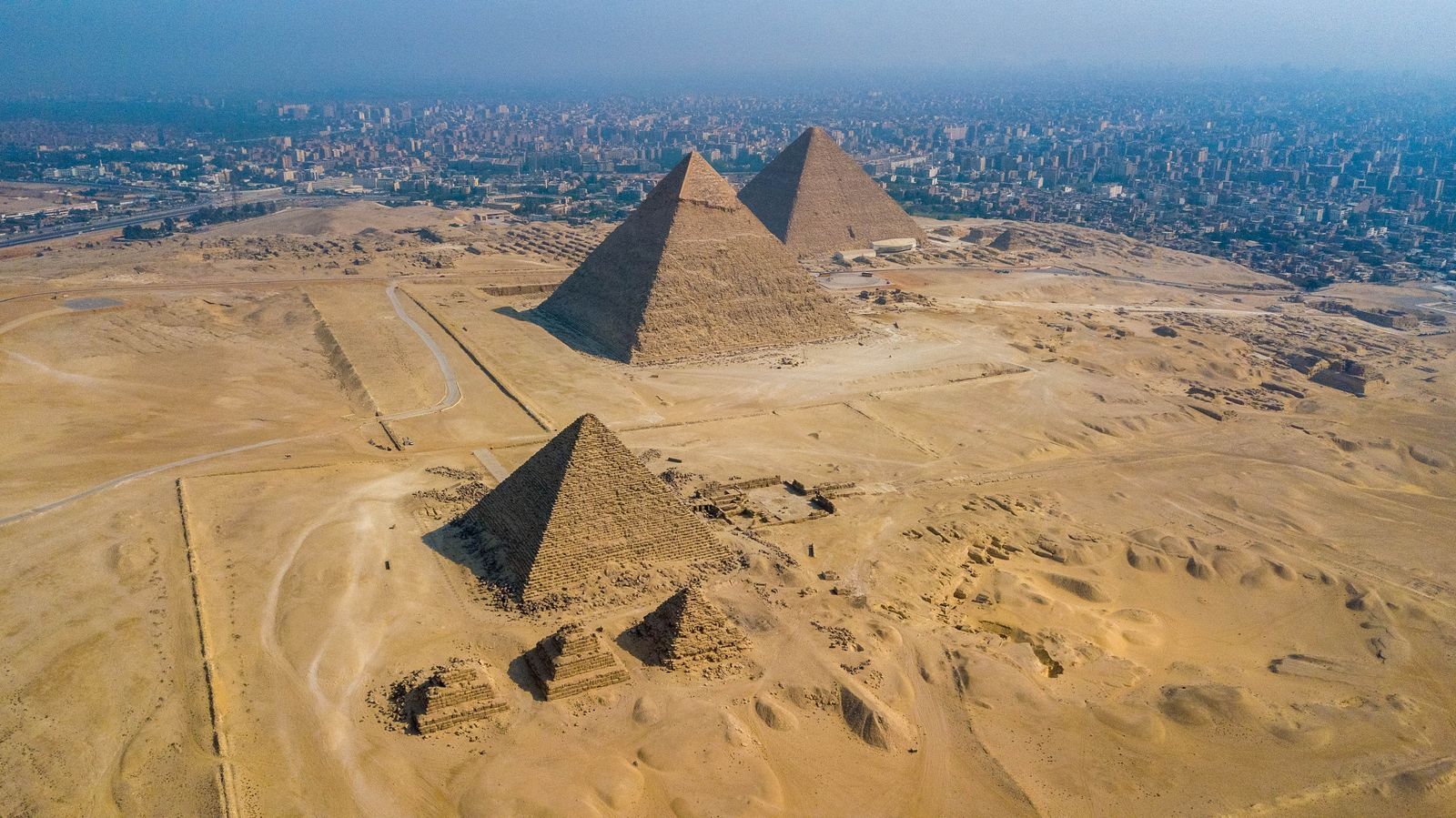
The Pyramids of Giza, standing proudly on the Giza Plateau near Cairo, Egypt, are among the most iconic landmarks in the world. Built over 4,500 years ago during Egypt’s Old Kingdom, these monumental structures have fascinated explorers, historians, and travelers for centuries. Not only do they symbolize ancient power and innovation, but they also continue to spark curiosity about how such incredible feats were achieved without modern technology.
In this detailed guide, you’ll discover fascinating facts about the Pyramids of Giza—from their massive scale and astronomical precision to hidden chambers and modern discoveries that keep rewriting history.
1. Ancient Wonders That Still Captivate
The Great Pyramid of Khufu is not only the largest but also the oldest of the three pyramids at Giza. Moreover, it is the only surviving wonder of the original Seven Wonders of the Ancient World. Built around 2560 BC, it has endured for more than 4,500 years, withstanding harsh desert conditions and human activity.
2. Impressive Scale and Precision
At its completion, the Great Pyramid reached 146.6 m (481 ft), making it the tallest human-made structure on Earth for nearly 4,000 years. Today, erosion and the loss of its polished casing stones have reduced its height to about 138–139 m. Nevertheless, its extraordinary precision and sheer scale still impress modern engineers.
3. Millions of Massive Stones
The pyramid contains an estimated 2.3 to 2.5 million blocks of limestone and granite. Some stones weigh more than 15 tons, yet ancient builders managed to transport and place them with astonishing accuracy. As a result, many scholars still debate the techniques used.
4. Astronomical Alignment and Symbolism
The three main pyramids—Khufu, Khafre, and Menkaure—align perfectly with the cardinal directions. In addition, they mirror the Orion’s Belt constellation, suggesting a symbolic connection between the pharaohs and the heavens. This remarkable precision proves the ancient Egyptians had advanced knowledge of astronomy.
5. Famous Hidden Voids
In 2017, the ScanPyramids project discovered a massive hidden void above the Grand Gallery. This mysterious chamber, about 30 m long, remains unexplored. Consequently, researchers continue to speculate about its purpose.
6. Laborers, Not Slaves
Contrary to old myths, the pyramids were not built by slaves. Instead, archaeological evidence shows that skilled laborers constructed them. These workers lived in nearby villages, enjoyed access to bakeries and medical facilities, and received payment for their service. Therefore, the pyramids stand as monuments to skilled teamwork rather than forced labor.
7. Gleaming Casings That Once Shone Bright
Originally, the pyramids were covered with highly polished Tura limestone. As a result, they reflected sunlight brilliantly, making them visible from miles away. Although erosion removed most of the casing stones, some remain near the top of Khafre’s pyramid, giving us a glimpse of their dazzling past.
8. Internal Chambers and Star Shafts
The Great Pyramid features multiple internal spaces, including the King’s Chamber, Queen’s Chamber, and an unfinished subterranean chamber. Furthermore, it contains narrow shafts—sometimes called “air shafts”—that align with specific stars. Scholars believe these shafts held symbolic or religious significance.
9. The Great Sphinx: Guardian of the Plateau
Next to Khafre’s pyramid stands the Great Sphinx of Giza, carved directly from limestone bedrock. Most historians believe it represents Pharaoh Khafre himself. Over the centuries, the Sphinx has served as both a guardian and a symbol of ancient Egyptian mystery.
10. Role in Ancient Beliefs and the Afterlife
The pyramids were built as elaborate tombs for the pharaohs. Egyptians believed the pyramid acted as a gateway to the afterlife, helping the ruler ascend to the heavens. Consequently, their construction was deeply tied to religious and cultural traditions.
11. Engineering Methods Still Debated
How the builders transported and placed massive stone blocks remains an ongoing debate. Some theories suggest ramps, while others point to sledges lubricated with water. Recently, papyrus records from the diary of an inspector named Merer revealed details about transporting limestone blocks by boat along the Nile. These insights prove that ancient Egyptians combined ingenuity with effective logistics.
12. A Center for Historical Study
In the late 19th century, archaeologist Sir William Flinders Petrie conducted pioneering studies at Giza. His precise methods laid the foundation for modern archaeological practices. Therefore, the pyramids are not only relics of the past but also a cornerstone of scientific study.
13. Tourism & Preservation Efforts
Today, the Pyramids of Giza attract over 14 million visitors annually. However, this popularity comes with challenges. Pollution, urban expansion, and climate changes threaten the monuments. As a result, both Egyptian authorities and international organizations are working hard to preserve them for future generations.
14. Ancient Ships Buried at the Site
In 1954, archaeologists unearthed the Khufu ship, a fully intact wooden vessel buried near the Great Pyramid. This ceremonial boat likely symbolized the pharaoh’s journey to the afterlife. Because of its remarkable preservation, it remains one of the most significant archaeological finds in Egypt.
15. Beyond Giza: Egypt’s Pyramid Legacy
Although Giza is home to the most famous pyramids, Egypt has more than 100 pyramids. Among them is the Step Pyramid of Djoser at Saqqara, considered the earliest large-scale stone building in history. Thus, Giza represents the peak of a long tradition of pyramid-building.
Frequently Asked Questions
Evidence from worker villages, burial tombs, and inscriptions indicates that the builders were skilled, paid laborers who lived nearby, not slaves, and received regular care and provisions.
In 2017, researchers from the ScanPyramids project used muon imaging to detect a previously unknown void—about 30 meters long, located above the Grand Gallery. Its purpose remains speculative, continuing to intrigue researchers.
The pyramids demonstrate incredible astronomical precision in their orientation to the cardinal directions. The alignment with Orion’s Belt is thought to reflect religious symbolism—possibly linking the pharaohs to the afterlife and divine stars.
Quick Overview Table
| Fact # | Highlight |
|---|---|
| 1 | Great Pyramid is the only surviving ancient wonder |
| 2 | Tallest man-made structure for nearly 4,000 years |
| 3 | Built with over 2.3–2.5 million stone blocks |
| 4 | Aligned perfectly with cardinal directions and Orion |
| 5 | Contains a newly discovered large internal void |
| 6 | Built by skilled, respected laborers |
| 7 | Once gleamed with polished limestone casing |
| 8 | Houses mysterious star shafts and internal chambers |
| 9 | Guarded by the enigmatic Great Sphinx |
| 10 | Served as pharaohs’ tombs with immense religious purpose |
| 11 | Engineering methods still debated |
| 12 | Groundbreaking archaeological studies originated here |
| 13 | Draws millions of tourists and global preservation work |
| 14 | Surrounding site includes ancient boat burials |
| 15 | Egypt boasts many pyramids beyond Giza |
Explore more geographical locations.