

Interesting Facts about the Taj Mahal in India
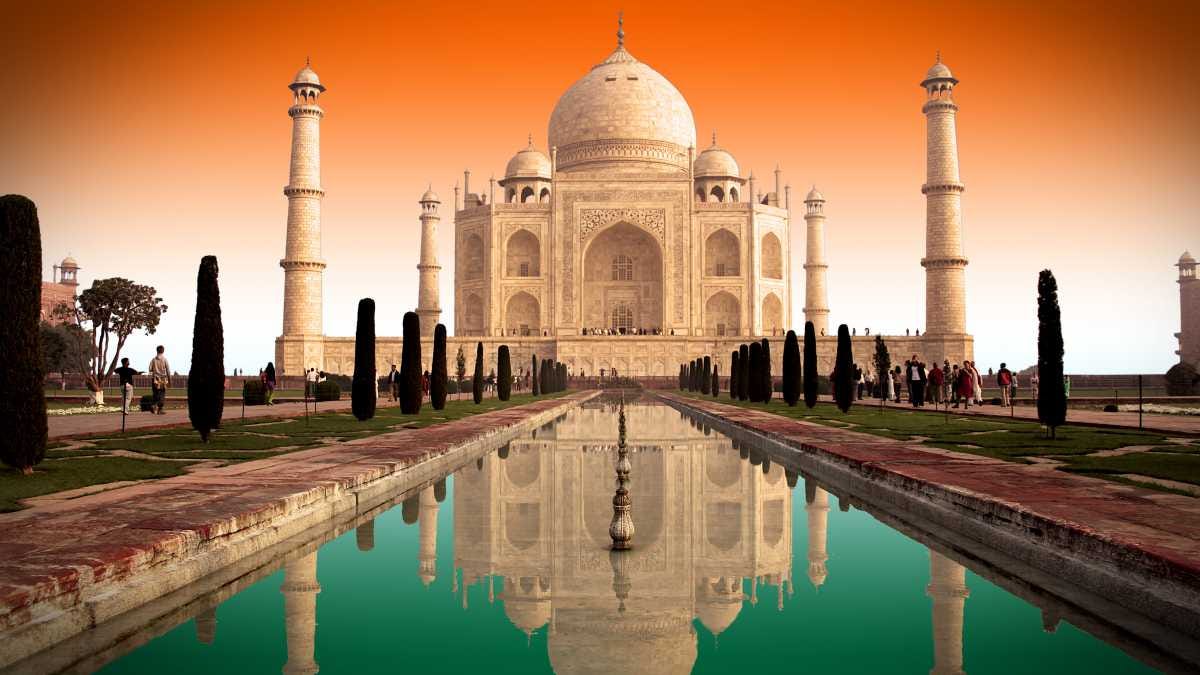
The Taj Mahal, an eternal symbol of love and one of the world’s most breathtaking architectural masterpieces, graces the banks of the Yamuna River in Agra, Uttar Pradesh. Built in the 17th century by the Mughal Emperor Shah Jahan for his beloved wife Mumtaz Mahal, this stunning mausoleum continues to enchant millions of visitors each year.
Recognized as a UNESCO World Heritage Site since 1983 and one of the New Seven Wonders of the World, the Taj Mahal remains not only an emblem of India’s cultural richness but also an engineering marvel that defies time. Beyond its postcard-perfect beauty, the monument holds countless fascinating stories, hidden facts, and enduring mysteries.
This detailed article uncovers interesting facts about the Taj Mahal, weaving together its history, design, legends, economics, and conservation.
1. The Eternal Love Story Behind Its Creation
The Taj Mahal was commissioned in 1632 after the death of Mumtaz Mahal, Shah Jahan’s most cherished wife, who passed away while giving birth to their 14th child. Heartbroken, Shah Jahan envisioned a monument that would immortalize her memory.
For 22 years, more than 20,000 artisans, craftsmen, and architects worked tirelessly to create the mausoleum. Their dedication turned grief into grandeur, producing one of the most admired works of art in human history.
2. Monumental Scale and Symmetry
The Taj Mahal complex covers 42 acres, including gardens, mosques, guesthouses, gates, and the central mausoleum. The main dome alone rises to 73 meters (240 feet), crowned with a gilded finial. Four minarets frame the tomb, carefully angled outward to protect the structure in case of collapse during earthquakes.
The symmetry is impeccable: whether you approach from the gates, gardens, or reflecting pool, every element aligns harmoniously. Even the cenotaphs inside mirror this geometric balance, though Mumtaz’s cenotaph rests precisely at the center, while Shah Jahan’s lies slightly offset.
3. White Marble that Shifts with the Sky
One of the Taj Mahal’s most captivating features is its changing colors. At dawn, the marble glows with a soft pink hue; at noon, it dazzles in pure white; and at sunset, it radiates a golden shade. On full moon nights, the Taj appears almost ethereal, glowing like silver.
This chameleon-like quality comes from the reflective Makrana marble, which reacts to natural light and atmospheric conditions, giving the monument a mystical aura.
4. An International Collaboration of Materials
Contrary to the belief that it is purely Indian, the Taj Mahal is a global collaboration of materials. The white marble came from Makrana in Rajasthan; jasper from Punjab; turquoise from Tibet; jade from China; sapphire from Sri Lanka; and lapis lazuli from Afghanistan.
Over 28 types of precious and semi-precious stones adorned its walls, though many were looted during invasions in later centuries.
5. Pietra Dura: The Art of Stone Inlay
The Taj Mahal’s exquisite decoration uses pietra dura (parchin kari), a technique of inlaying colored stones into marble. Delicate floral patterns, Quranic inscriptions, and intricate motifs adorn the surfaces.
Artisans used calligraphy in Thuluth script, ensuring that letters appear the same size when viewed from below—a subtle yet remarkable optical illusion.
6. Engineering Brilliance on Marshy Land
The Taj was built on the soft, marshy banks of the Yamuna. To support it, engineers devised a foundation of timber platforms resting on stone wells, strengthened by water absorption.
The minarets lean slightly outward, ensuring they fall away from the tomb in case of earthquakes—a forward-thinking safety design centuries ahead of its time.
7. A Mausoleum, Not a Palace
Many visitors assume the Taj Mahal was a royal residence. In reality, it is a mausoleum. The cenotaphs of Mumtaz Mahal and Shah Jahan rest within, but the true graves lie in a lower chamber, in accordance with Islamic tradition.
This distinction emphasizes that the Taj is not a palace of grandeur, but a tomb built out of devotion.
8. The Great Cost of Construction
The construction reportedly cost 32 million rupees in the 17th century. Adjusted for modern value, this would amount to billions of US dollars. Shah Jahan spared no expense, employing master artisans from Central Asia and Persia, along with local Indian craftsmen.
9. The Tragic Fate of Shah Jahan
Ironically, Shah Jahan himself never ruled from Agra after completing the Taj. His son, Aurangzeb, overthrew him and imprisoned him in the Agra Fort. From there, Shah Jahan spent his final years gazing at the Taj Mahal from a small window, longing to join Mumtaz in the mausoleum.
10. Revenue Powerhouse of Indian Tourism
Today, the Taj Mahal is not just a cultural gem but also a major economic driver. In FY 2023–24, it earned nearly ₹98.7 crore in ticket sales, the highest among ASI monuments. Over the past five years, it has generated ₹297 crore, proving its enduring draw.
More than 6 million domestic tourists and 680,000 international tourists visited in 2024 alone. The Taj remains the top attraction for foreigners, even though Ayodhya’s Ram Mandir surpassed it in domestic footfall.
11. Myths and Legends Surrounding the Taj
The Taj Mahal is shrouded in myths. Some believe Shah Jahan planned a “Black Taj Mahal” across the Yamuna as his own tomb. Others claim British officers intended to dismantle the Taj and auction its marble.
Though historians dismiss these as exaggerations, they reflect the aura of mystery surrounding the monument.
12. Conservation Challenges
The Taj faces environmental threats from air pollution, acid rain, and insect activity caused by the polluted Yamuna. These factors lead to yellowing and greenish stains on its marble surface.
Preservation efforts include clay-pack treatments (multani mitti) to clean the marble, restrictions on vehicle emissions near the site, and continuous structural monitoring using modern tools like LiDAR scanning.
13. The Taj Under Threats and Security Measures
In May 2025, a hoax bomb threat temporarily disrupted operations, but swift security action restored normalcy. Such incidents highlight the monument’s vulnerability and the need for robust safety protocols.
14. A Living Legacy for Agra and Beyond
The Taj Mahal is not just an isolated monument—it has shaped the economy, culture, and identity of Agra. Hotels, handicraft industries, and tourism enterprises thrive around it. The city’s artisans still practice pietra dura, keeping Mughal-era skills alive.
Globally, the Taj has inspired poets, painters, photographers, and even replicas across countries—from Bangladesh to Dubai.
15. Global Recognition and Cultural Impact
Named a UNESCO World Heritage Site in 1983 and later one of the New Seven Wonders of the World, the Taj Mahal symbolizes India on a global stage. For travelers, it’s a bucket-list destination; for Indians, it’s a proud cultural treasure.
Frequently Asked Questions
The Taj Mahal combines unmatched Mughal architecture, pietra dura artistry, perfect symmetry, and a romantic backstory, making it one of the world’s greatest monuments.
The Makrana marble reflects different light conditions, making the Taj appear pink in the morning, white at midday, golden at sunset, and silver under the moonlight.
Conservation includes clay-pack cleaning, emission controls, restricted traffic near the site, and modern scanning technologies to monitor structural health.
Final Thoughts
The Taj Mahal is more than an architectural masterpiece—it is a timeless ode to love, a cultural landmark, and a global tourism powerhouse. Its beauty lies not only in marble domes and floral inlays but also in the enduring stories it tells of devotion, art, and resilience.
From generating billions in tourism revenue to inspiring millions of hearts, the Taj continues to live up to its reputation as the “Jewel of India.” Preserving it for future generations is not only a matter of national pride but also a responsibility to humanity’s shared heritage.



One thought on “Interesting Facts about the Taj Mahal in India”